Our Work
The ocean’s giants – sharks, whales, and other large marine species – are indicators of ocean health and among its most threatened inhabitants. Beneath The Waves focuses its science and conservation work on these species as connectors, living instruments, and biological archives. By tracking their movements, decoding their biochemical and genomic adaptations for resilience, and translating discovery into action, our team generates conservation solutions that protect ocean ecosystems and support the communities who depend on them.
We build and scale impactful research and conservation programs, leading field expeditions and developing laboratory and advanced computing technologies that turn discovery into protection.
IN COLLABORATION WITH OCEAN GIANTSWe organize our work around what these species actually reveal through our projects: where they go, what they’re built from, and what they need.
01
WHERE THEY GO
MOVEMENT. BEHAVIOR. CONNECTIVITY.Example projects:
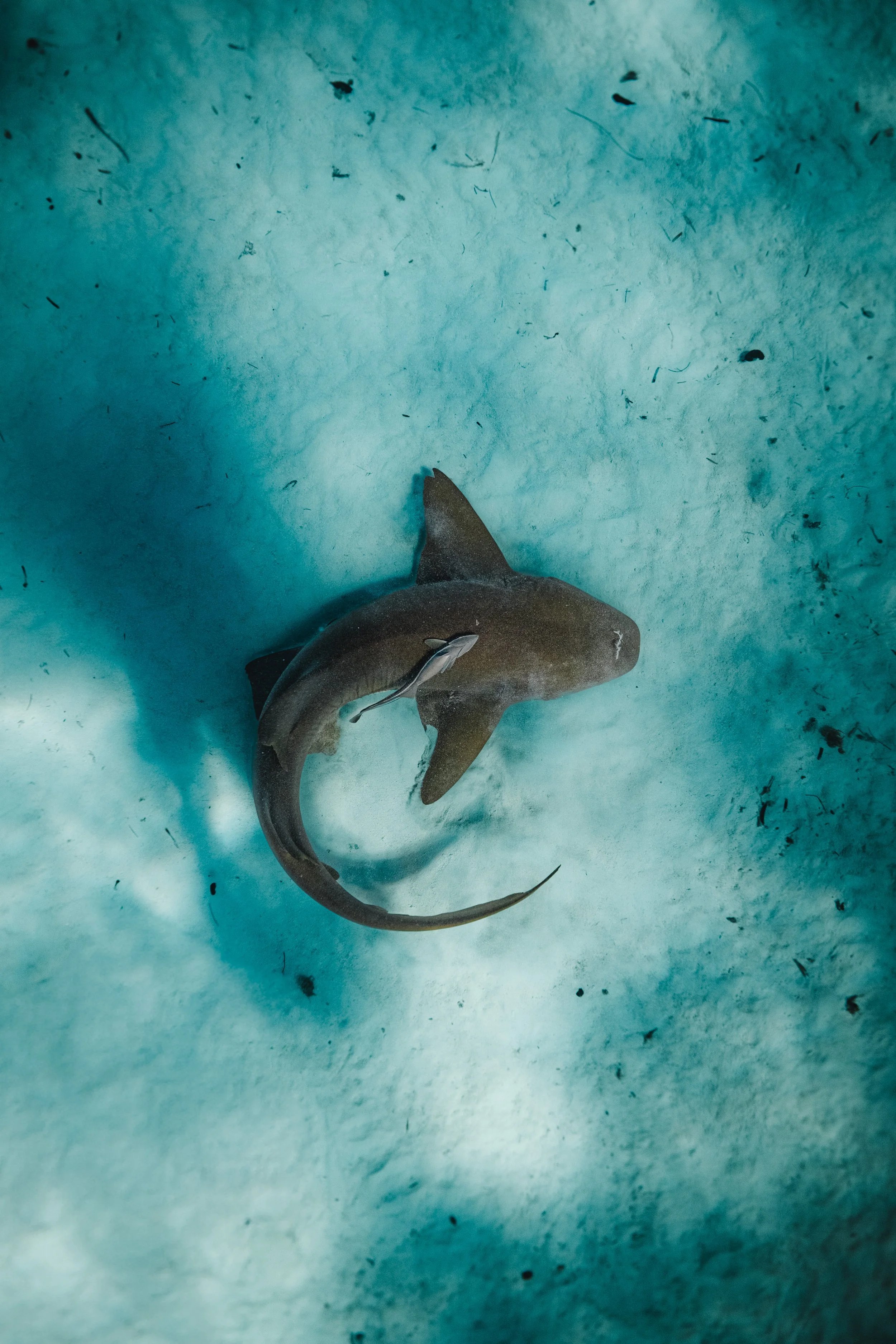
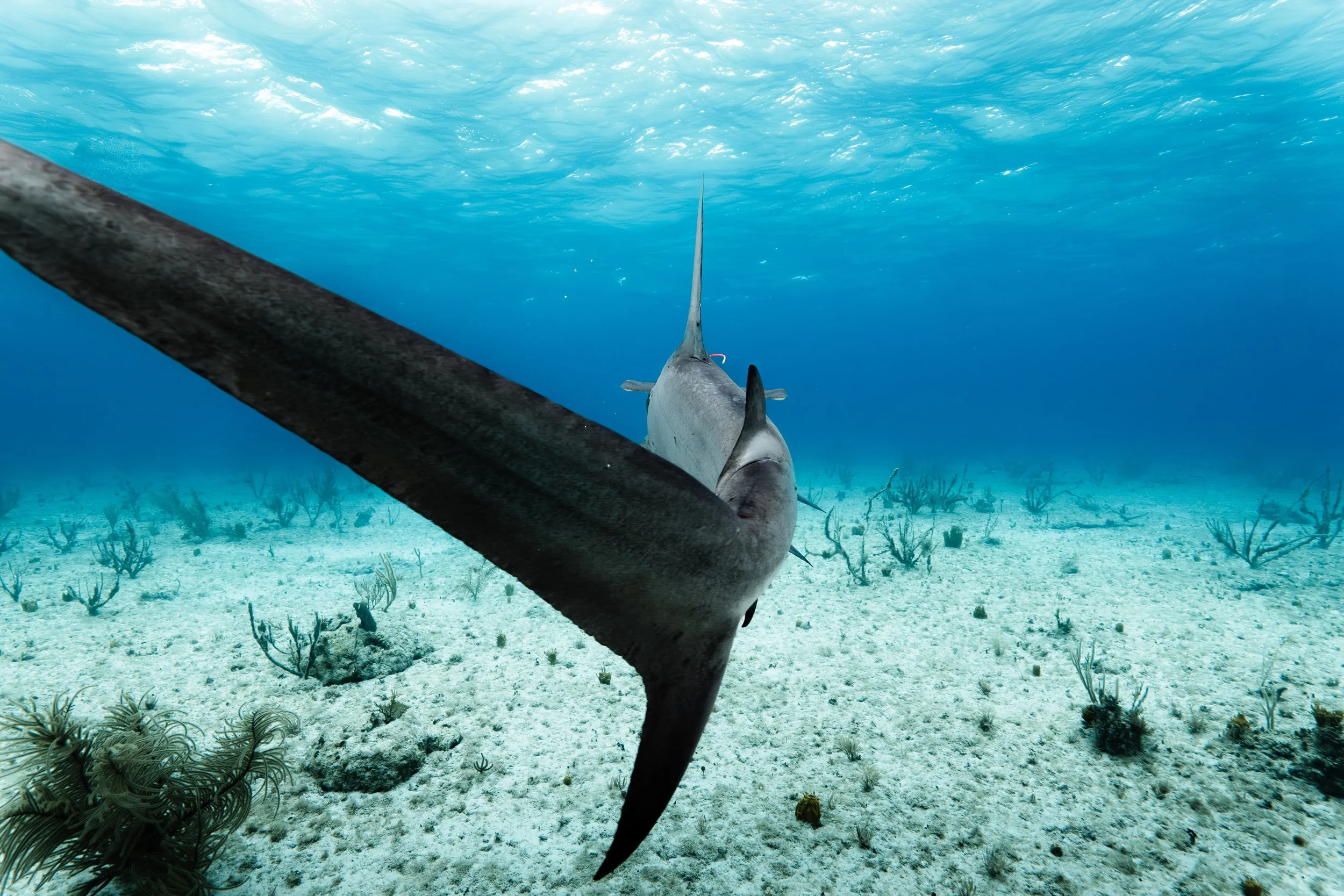
Shark movement and habitat-use monitoring: tracking migration and residency of tiger and Caribbean reef sharks (Bahamas, Turks and Caicos) and blue and mako sharks (Atlantic and Pacific).
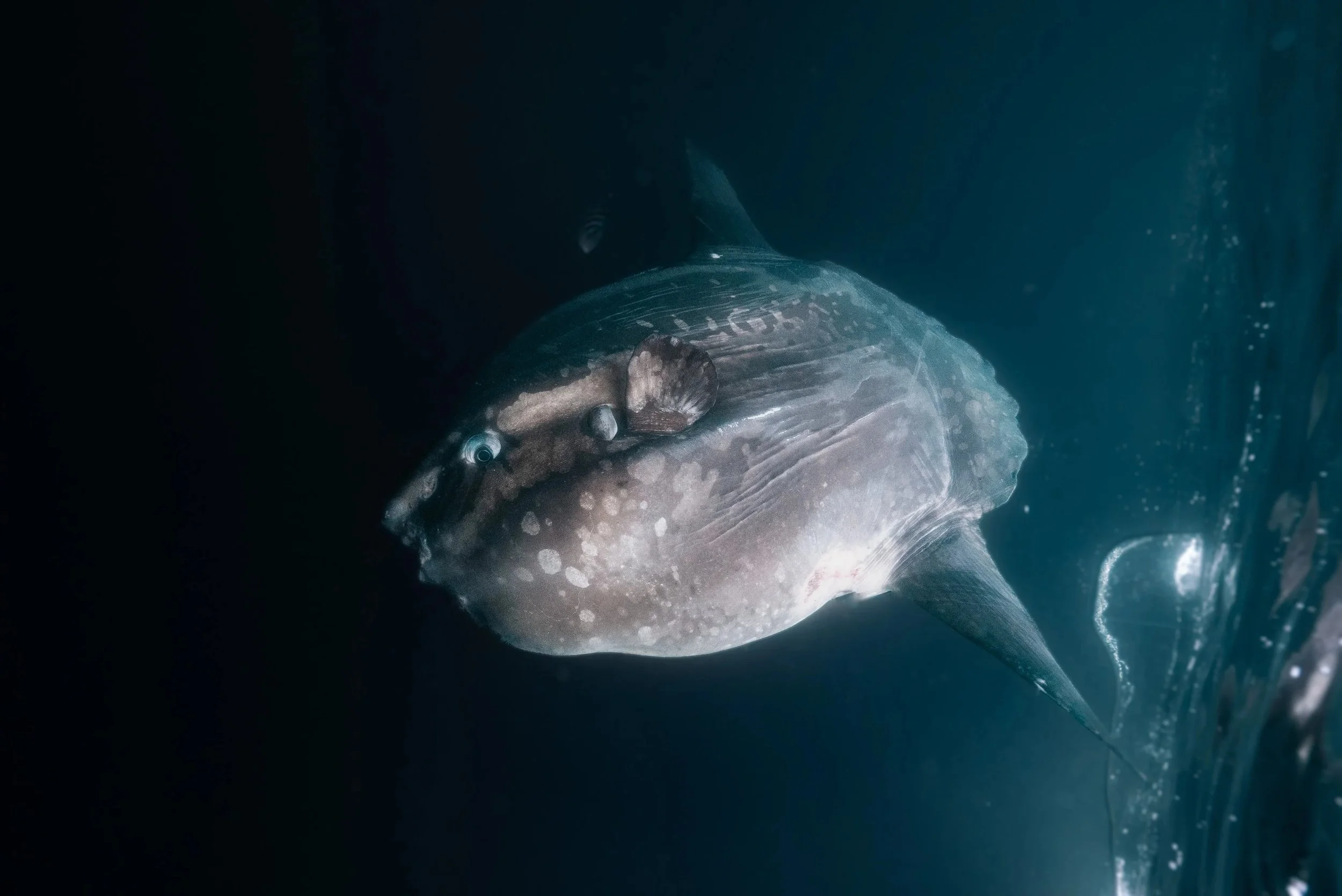
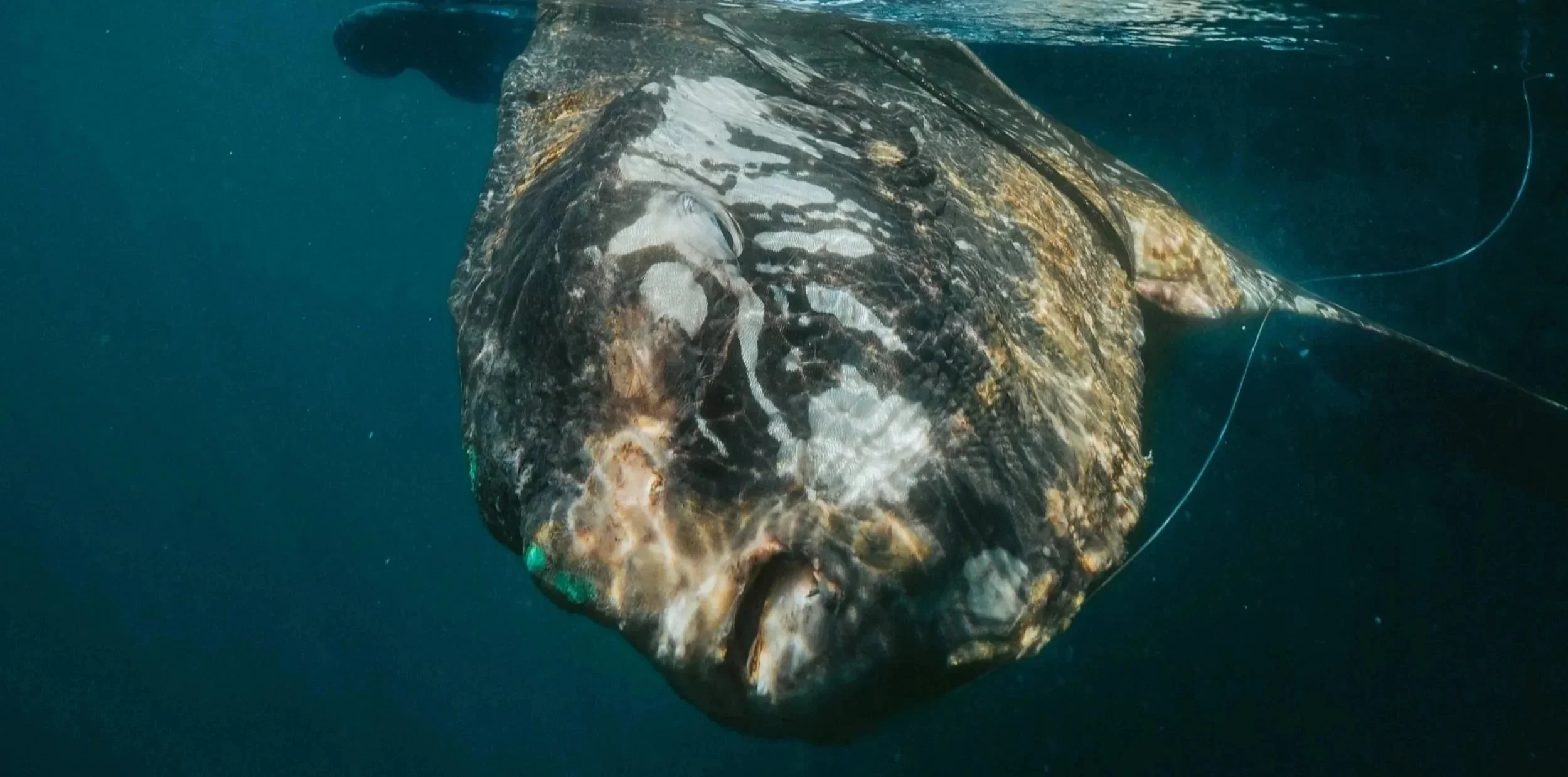
Ocean sunfish (Mola mola) life history tracking: satellite tagging of the world’s heaviest bony fish across entire ocean basins (Cape Cod, USA).
Example projects:
02
WHAT THEY’RE BUILT FROM
GENOMICS. BIOCHEMISTRY. MIRCOBIOME.Population genetics and microbiome of basking sharks (Ireland): decoding the biological adaptations that support one of the ocean's largest filter feeders.
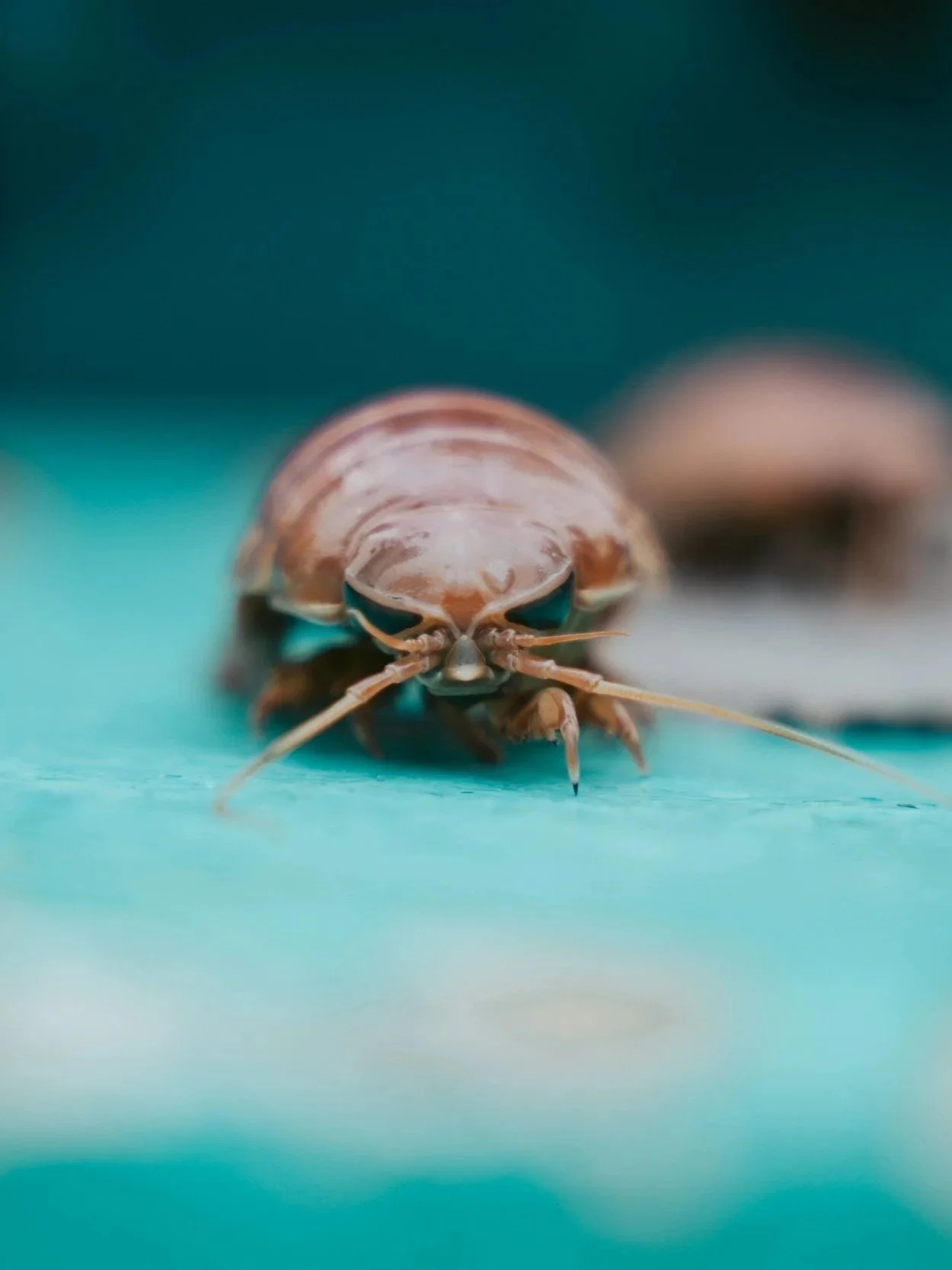
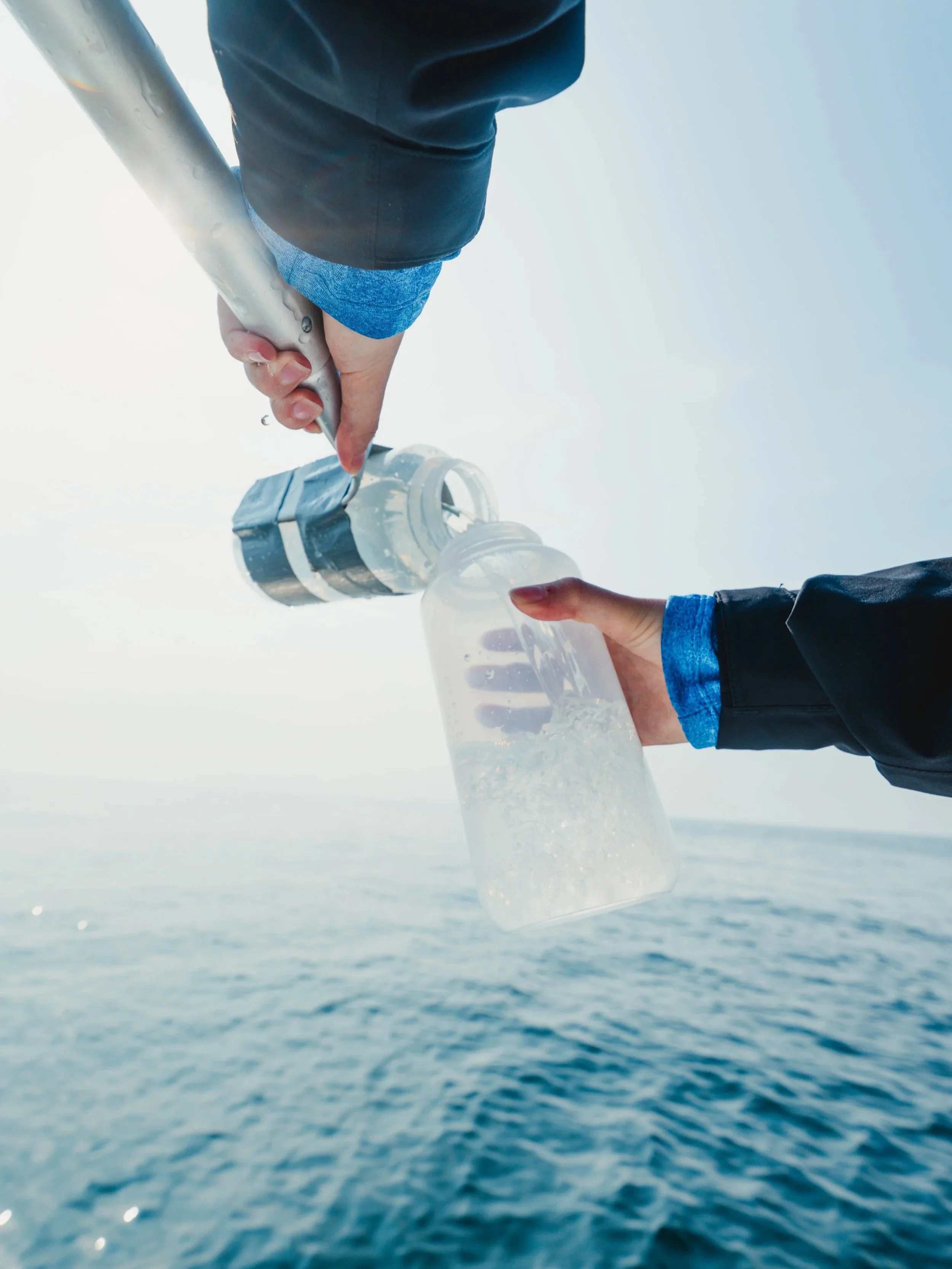
Deep-sea biodiversity surveys focused on the giant deep-sea isopod (Japan): investigating the genomic basis of gigantism and resilience in twilight-zone species.
03
WHAT THEY NEED
HABITAT. PROTECTION. POLICY.Example projects:
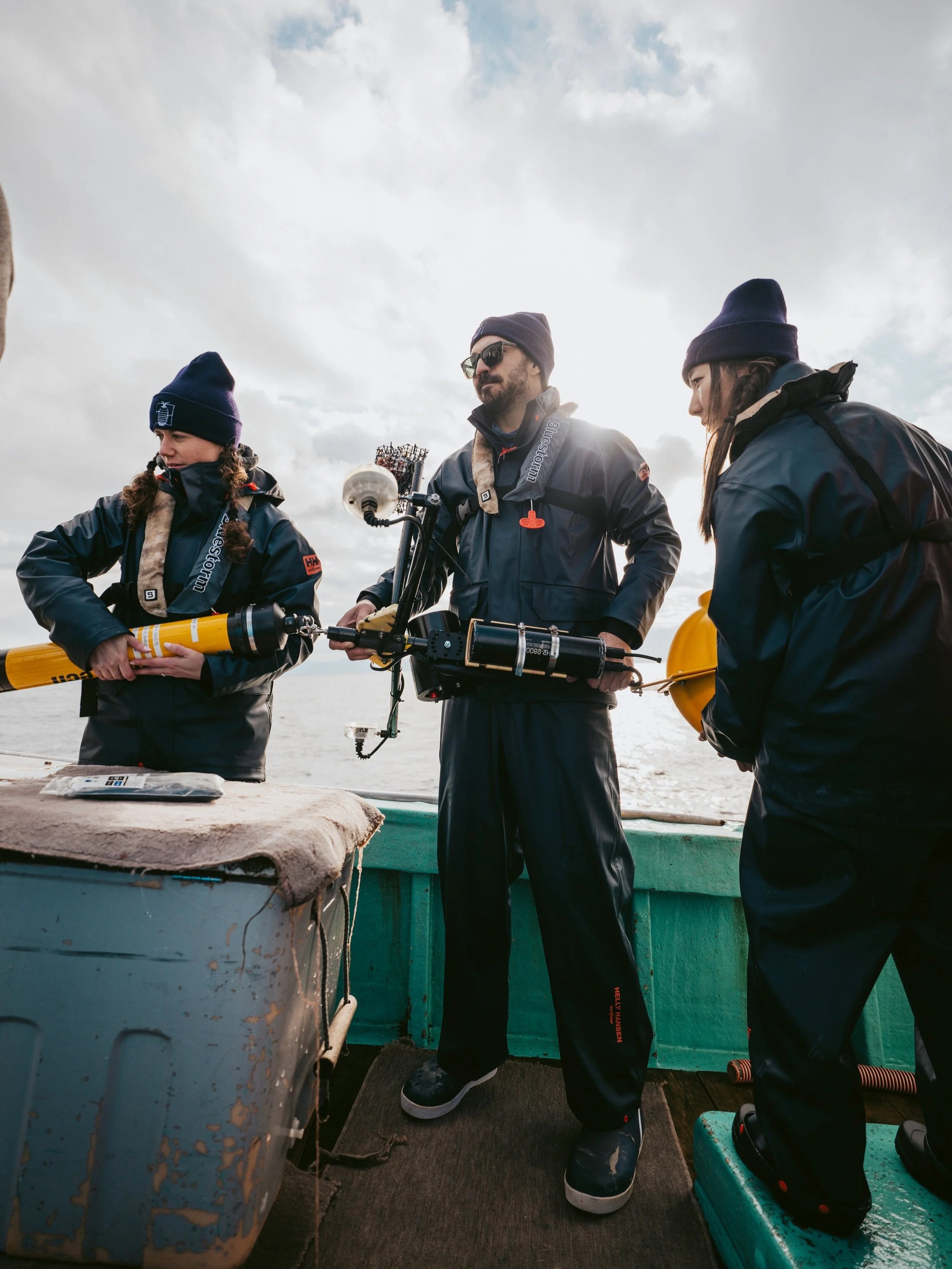
Killer whale acoustic monitoring and management plan development (Baja California Sur, Mexico): using passive acoustic tracking to inform conservation measures for the region's resident orca population.
Blue carbon monitoring and biodiversity surveys (Bahamas, Dutch Caribbean): seagrass and mangrove mapping and carbon stock quantification that has informed national legislation and marine protected area policy.
PUBLICATIONS
A RUNNING LIST OF OUR PEER-REVIEWED PUBLICATIONS
-
2026
Fragmentation of sharp-tail sunfish (Masturus lanceolatus) caused by high-impact ramming behavior in orcas (Orcinus orca). Read Here
Linking physiological state to movement dynamics in an open ocean predator, the blue shark (Prionace glauca). Read Here
2025
Life stage and seasonal habitat use of the porbeagle Lamna nasus in the Northwest Atlantic Ocean. Read Here
Ontogenetic shifts in space use and habitat selection of tiger sharks (Galeocerdo cuvier) in The Bahamas. Read Here
2024
An integrated multi-source dataset of elasmobranchs in the Red Sea following the Red Sea Decade Expedition. Read Here
Community composition and organic carbon flux in twilight zone communities of The Tongue of the Ocean and Exuma Sound, The Bahamas. Read Here
Depth Range Extension for the Misty Grouper Hyporthodus mystacinus Documented via Deep-Sea Landers throughout the Greater Caribbean. Read Here
First records of the roughskin dogfish Centroscymnus owstonii in the greater Antilles, central Caribbean Sea, Western Atlantic Ocean. Read Here
Killer whales (Orcinus orca) hunt, kill and consume the largest fish on Earth, the whale shark (Rhincodon typus). Read Here
Novel behavioral observations and body scarring for the bluntnose sixgill shark (Hexanchus griseus) offer clues to reproductive patterns and potential mating events. Read Here
Correction to: Novel deep-sea observations reveal twilight zone occurrence for two species of pelagic sharks: the bignose shark Carcharhinus altimus and the silky shark Carcharhinus falciformis. Read Here
Observations of biennial reproduction in Caribbean reef sharks ‘Carcharhinus perezi’. Read Here
On the tracks of white sharks in the Mediterranean Sea. Read Here
Orca (Orcinus orca) and shark predator-prey interactions within Cabo Pulmo National Park in the Gulf of California, Mexico. Read Here
Reef fish biodiversity and occurrence of endangered sharks within a small marine protected area off Sint Maarten, Dutch Caribbean. Read Here
Corrigendum: Renewed occurrence of schooling scalloped hammerhead (Sphyrna lewini) and of great hammerhead (S. mokarran) sharks in the Cayman Islands. Read Here
2023
Detecting Mediterranean White Sharks with Environmental DNA. Read Here
Energetic connectivity of diverse elasmobranch populations – implications for ecological resilience. Read Here
First records of the blurred lantern shark Etmopterus bigelowi from the Cayman Islands, Western Atlantic. Read Here
Linking vertical movements of large pelagic predators with distribution patterns of biomass in the open ocean. Read Here
Novel aerial observations of a group of killer whales Orcinus orca in The Bahamas. Read Here
2022
Diving into the vertical dimension of elasmobranch movement ecology. Read Here
Estimated life-history traits and movements of the Caribbean reef shark (Carcharhinus perezi) in The Bahamas based on tag-recapture data. Read Here
First descriptions of the seasonal habitat use and residency of scalloped hammerhead (Sphyrna lewini) and Galapagos sharks (Carcharhinus galapagensis) at a coastal seamount off Japan. Read Here
Opportunistic camera surveys provide insight into discrete foraging behaviours in nurse sharks (Ginglymostoma cirratum). Read Here
The movement ecology of fishes. Read Here
2021
Humpback Whale Instigates Object Play with a Lion’s Mane Jellyfish. Read Here
Large sharks exhibit varying behavioral responses to major hurricanes. Read Here
Spatial Connectivity and Drivers of Shark Habitat Use Within a Large Marine Protected Area in the Caribbean, The Bahamas Shark Sanctuary. Read Here
2020
Effects of exposure to large sharks on the abundance and behavior of mobile prey fishes along a temperate coastal gradient. Read Here
2019
Diverse resource-use strategies in a large-bodied marine predator guild: evidence from differential use of resource subsidies and intraspecific isotopic variation. Read Here
Evaluating the effects of large marine predators on mobile prey behavior across subtropical reef ecosystems. Read Here
First in situ observations of the sharpnose sevengill shark (Heptranchias perlo), from the Tongue of the Ocean, Bahamas. Read Here
Physiological consequences of varying large shark exposure on striped bass (Morone saxatilis). Read Here
Predatory behaviors of coyotes (Canis latrans) living in coastal ecosystems. Read Here
Spatiotemporal ecology of juvenile Muskellunge (Esox masquinongy) and Northern Pike (Esox lucius) in upper St. Lawrence River nursery bays during their inaugural fall and winter. Read Here
2018
A Comparison of Reproductive and Energetic States in a Marine Apex Predator (the Tiger Shark, Galeocerdo cuvier). Read Here
Apex predatory sharks and crocodiles simultaneously scavenge a whale carcass. Read Here
Individual voices in a cluttered soundscape: acoustic ecology of the Bocon toadfish, Amphichthys cryptocentrus. Read Here
2017
Diel habitat use patterns of a marine apex predator (tiger shark, Galeocerdo cuvier) at a high use area exposed to dive tourism. Read Here
Energy Landscapes and the Landscape of Fear. Read Here
Nocturnal and crepuscular behavior in elasmobranchs: a review of movement, habitat use, foraging, and reproduction in the dark. Read Here
Patterns of resource use and isotopic niche overlap among three species of sharks occurring within a protected subtropical estuary. Read Here
2016
Avian predators transmit fear along the air–water interface influencing prey and their parental care. Read Here
Behavioral evidence suggests facultative scavenging by a marine apex predator during a food pulse. Read Here
Intraspecific variation in body size does not alter the effects of mesopredators on prey. Read Here
Seasonal and life-stage variation in the reproductive ecology of a marine apex predator, the tiger shark Galeocerdo cuvier, at a protected female-dominated site. Read Here
Shallow water tidal flat use and associated specialized foraging behavior of the great hammerhead shark (Sphyrna mokarran). Read Here
2015
Kelp gulls prey on the eyes of juvenile Cape fur seals in Namibia. Read Here
-
2026
Addressing distributional and taxonomic uncertainty in the deep-sea giant isopod genus Bathynomus with an integrated observational and molecular framework. Read Here
Bathynomus apothecarius (Isopoda, Cirolanidae), a new species of giant isopod from the deep Northwestern Atlantic Ocean. Read Here
2023
Accumulation of per- and polyfluoroalkyl substances (PFASs) by sharks from two contrasting habitats: New York Bight and The Bahamas. Read Here
2022
Age-Dependent Dispersal and Relatedness in Tiger Sharks (Galeocerdo cuvier). Read Here
Observations of hypomelanosis in the nurse shark Ginglymostoma cirratum. Read Here
2021
Complete mitochondrial genome of the Caribbean reef shark, Carcharhinus perezi (Carcharhinformes: Carcharhinidae). Read Here
First Application of 360-Degree Camera Technology to Marine Predator Bio-Logging. Read Here
Metal concentrations in coastal sharks from The Bahamas with a focus on the Caribbean Reef shark. Read Here
2020
Variation of body condition and plasma energy substrates with life stage, sex, and season in wild-sampled nurse sharks Ginglymostoma cirratum. Read Here
2019
Conservation genetics of the bonnethead shark Sphyrna tiburo in Bocas del Toro, Panama: Preliminary evidence of a unique stock. Read Here
Effects of predator exposure on baseline and stress-induced glucocorticoid hormone concentrations in pumpkinseed Lepomis gibbosus. Read Here
2017
Energy metabolism in mobile, wild-sampled sharks inferred by plasma lipids. Read Here
2014
Body condition predicts energy stores in apex predatory sharks. Read Here
-
2026
Estimating Dutch Caribbean Salt Marsh Extent for Inclusion of Island Territories in Ecosystem Mapping. Read Here
Marine conservation: linking taxonomy, Red Listing, and public engagement. Read Here
Sharks at night, exposed to city light: Melatonin concentrations in two shark species differ in response to artificial light at night. Read Here
2025
Carbon dynamics under loss and restoration scenarios in the world’s largest seagrass meadow. Read Here
Global tracking of marine megafauna space use reveals how to achieve conservation targets. Read Here
Vulnerability of marine megafauna to global at-sea anthropogenic threats. Read Here
2024
Freshwater fish sanctuaries provide benefits for riparian wildlife. Read Here
High-resolution, precision mapping of seagrass blue carbon habitat using multi-spectral imaging and aerial LiDAR. Read Here
Significant carbonate burial in The Bahamas seagrass ecosystem. Read Here
Transboundary movements of porbeagle sharks support need for continued cooperative research and management approaches. Read Here
2023
Blue carbon ecosystems and shark behaviour: an overview of key relationships, network interactions, climate impacts, and future research needs. Read Here
Consequences of “natural” disasters on aquatic life and habitats. Read Here
Effects of anthropogenic activities on scavenger communities in freshwater riparian zones of eastern Ontario, Canada. Read Here
Global tracking of shark movements, behaviour and ecology: A review of the renaissance years of satellite tagging studies, 2010–2020. Read Here
Quantifying longline bycatch mortality for pelagic sharks in western Pacific shark sanctuaries. Read Here
Substantial blue carbon sequestration in the world's largest seagrass meadow. Read Here
2022
Capture heats up sharks. Read Here
Economic impact and conservation potential of shark-diving tourism in the Azores Islands. Read Here
Emergent research and priorities for shark and ray conservation. Read Here
Physiological state predicts space use of sharks at a tourism provisioning site. Read Here
Recreational fishing fight times are not correlated with physiological status of blue sharks (Prionace glauca) in the Northwestern Atlantic. Read Here
Tiger sharks support the characterization of the world’s largest seagrass ecosystem. Read Here
Urban sharks: residency patterns of marine top predators in relation to a coastal metropolis. Read Here
2021
Challenges and conservation potential of shark-diving tourism in the Macaronesian archipelagos. Read Here
Global COVID-19 lockdown highlights humans as both threats and custodians of the environment. Read Here
Ocean warming alters the distributional range, migratory timing, and spatial protections of an apex predator, the tiger shark (Galeocerdo cuvier). Read Here
Redefining provisioning in marine wildlife tourism. Read Here
Reply to: Caution over the use of ecological big data for conservation. Read Here
Reply to: Shark mortality cannot be assessed by fishery overlap alone. Read Here
Social Network Analysis Reveals the Subtle Impacts of Tourist Provisioning on the Social Behavior of a Generalist Marine Apex Predator. Read Here
Space use patterns of sharks in relation to boat activity in an urbanized coastal waterway. Read Here
WTO must ban harmful fisheries subsidies. Read Here
2020
A Blueprint for an Inclusive, Global Deep-Sea Ocean Decade Field Program. Read Here
A decade to study deep-sea life. Read Here
Avoiding wasted research resources in conservation science. Read Here
Exposure to boat noise in the field yields minimal stress response in wild reef fish. Read Here
Going the Distance: Influence of Distance Between Boat Noise and Nest Site on the Behavior of Paternal Smallmouth Bass. Read Here
Overcoming the concrete conquest of aquatic ecosystems. Read Here
Saws and the city: smalltooth sawfish Pristis pectinata encounters, recovery potential, and research priorities in urbanized coastal waters off Miami, Florida, USA. Read Here
The Caribbean needs big marine protected areas. Read Here
2019
Biodiversity assessment of tropical shelf eukaryotic communities via pelagic eDNA metabarcoding. Read Here
Ecosystem Function and Services of Aquatic Predators in the Anthropocene. Read Here
Effects of short-term capture on the physiology of white sharks Carcharodon carcharias: amino acids and fatty acids. Read Here
Global spatial risk assessment of sharks under the footprint of fisheries. Read Here
2018
A New Method for Catching Wilson A New Method for Catching Wilson's Storm Petrels Oceanites Oceanicus at Sea. Read Here
Are 3 minutes good enough for obtaining baseline physiological samples from teleost fish? Read Here
Does motor noise from recreational boats alter parental care behaviour of a nesting freshwater fish? Read Here
Emerging challenges to shark-diving tourism. Read Here
Evaluating the efficacy of predator removal in a conflict-prone world. Read Here
The biology and conservation status of the large hammerhead shark complex: the great, scalloped, and smooth hammerheads. Read Here
2017
Conservation potential of apex predator tourism. Read Here
Considerations for effective science communication. Read Here
Extinction Risk and Conservation of the Earth's National Animal Symbols. Read Here
Fido, Fluffy, and wildlife conservation: The environmental consequences of domesticated animals. Read Here
Integrating reflexes with physiological measures to evaluate coastal shark stress response to capture. Read Here
2016
Behavioural responses to fisheries capture among sharks caught using experimental fishery gear. Read Here
Coexisting with Sharks: A Response to Carter and Linnell. Read Here
Shark recreational fisheries: Status, challenges, and research needs. Read Here
Sublethal consequences of urban life for wild vertebrates. Read Here
2015
Biological effects, conservation potential, and research priorities of shark diving tourism. Read Here
Evolutionary theory as a tool for predicting extinction risk. Read Here
How Long Is Too Long in Contemporary Peer Review? Perspectives from Authors Publishing in Conservation Biology Journals. Read Here
One size does not always fit all: a reply to Stroud and Feeley. Read Here
Risk perceptions and conservation ethics among recreational anglers targeting threatened sharks in the subtropical Atlantic. Read Here
2014
Angling for endangered fish: conservation problem or conservation action? Read Here
Evolved for Extinction: The Cost and Conservation Implications of Specialization in Hammerhead Sharks. Read Here
Lights, camera, science The utility and growing popularity of film festivals at scientific meetings. Read Here
Physiological stress response, reflex impairment, and survival of five sympatric shark species following experimental capture and release. Read Here
Vulnerability of oceanic sharks as pelagic longline bycatch. Read Here
CURRENT PROJECTS
Annual Impact Reports